How to Unpack After Moving: A Room-by-Room Strategy That Actually Works
A practical room-by-room unpacking plan that keeps you from living out of boxes for months. Covers what to unpack first, priority order, and when to stop for the day.
Key Takeaways
- Unpack your essentials box first. Toiletries, phone chargers, medications, a change of clothes, basic kitchen supplies. You packed this last; open it first.
- Start with the kitchen, not the bedroom. A functional kitchen means real meals, which means energy and morale. The bedroom just needs sheets on the bed for night one.
- Set a 3-day rule for the main living areas. Kitchen, bathrooms, and bedrooms should be functional within 72 hours. Everything else can wait.
- Create a "homeless items" bin for things that don't have a spot yet. Don't force placement on day one.
- Stop unpacking by 8 PM every night. Exhaustion leads to bad decisions about where things go, and you'll just move them again later.
I've watched dozens of people unpack after a move. The pattern is almost always the same: a burst of energy on day one, random box opening on day two, and by day four, a graveyard of half-opened boxes that stays for three months. Sometimes six. I've seen boxes from a move still sealed a full year later.
The fix isn't motivation. It's sequence.
Why does unpacking feel so overwhelming?
Most people unpack wrong because they open whatever box is closest. A room-by-room strategy with a fixed priority order cuts through the chaos and gives you small wins that build momentum.
Here's the thing: unpacking is harder than packing. When you pack, you're just grabbing what's there and putting it in a box. When you unpack, you're making decisions about where every single item lives in a space you don't know yet. That's mentally exhausting.
The other problem is that people try to make everything perfect immediately. They want the bookshelf arranged, the art hung, the spice rack alphabetized. On day one. That's a recipe for burnout.
What should you unpack first?
Your essentials box. This is the box (or tote) you packed last and loaded into the car, not the truck. It should have toiletries, medications, phone chargers, a roll of toilet paper, paper towels, a few trash bags, basic cleaning supplies, and a change of clothes for everyone.
If you followed a solid packing checklist, you already have this ready. If you didn't, learn from this move and do it next time.
After the essentials box, make the beds. All of them. You're going to be tired tonight, and falling into a made bed in your new home is one of the best feelings of moving day. Don't skip this step.
Should you unpack the kitchen or bedroom first?
Kitchen first. Every time. A functional kitchen gives you the ability to make coffee in the morning and cook a real meal at night, and that alone changes your energy for the rest of the unpacking process.
I know the bedroom feels more personal and comforting. But beyond sheets and pillows (which you already handled), the bedroom can wait. You don't need your closet organized on day one. You need to eat.
Here's my kitchen priority order:
- Coffee maker or kettle (non-negotiable)
- Dish soap, sponge, hand towel
- Plates, bowls, cups, silverware for the household
- One pot, one pan, one cutting board, one knife
- Everything else later
If you packed your kitchen well using a room-by-room approach, your boxes should be labeled clearly enough to find what you need fast.
What's the right room priority order?
After the kitchen and bedrooms, go bathrooms, then living room, then everything else. Resist the urge to "just quickly organize" the garage or guest room before the main spaces are done.
My recommended sequence:
- Essentials box (30 minutes)
- Bedrooms (make beds only, 20 minutes per room)
- Kitchen (2-3 hours for the basics)
- Bathrooms (30 minutes each, towels and toiletries only)
- Living room (couch positioned, TV set up if you want it)
- Kids' rooms (let them help arrange their own stuff)
- Home office (day two or three)
- Storage, garage, guest room (week two)
- Decorating, art, final touches (week three or later)
Notice the garage is near the bottom. I've seen people spend four hours organizing their garage on day one while the kitchen is still in boxes. Don't be that person.
How do you avoid the "box graveyard" problem?
Break down every box or return every tote the moment you empty it. A pile of empty boxes feels like progress. A pile of full ones feels like failure. Momentum matters more than perfection during the first week.
The box graveyard happens when you lose momentum around day three. You've unpacked the urgent stuff, and now you're staring at 15 boxes of books, decorations, and random kitchen gadgets you forgot you owned. The trick is breaking down (or stacking) empty boxes immediately after you unpack them. Seeing the pile shrink keeps you going.
Set a daily target. Day one: kitchen and bedrooms. Day two: bathrooms and living room. Day three: kids' rooms and office. After that, one to two boxes per day until you're done. That pace won't burn you out, and it prevents the "I'll get to it this weekend" spiral that turns into months.
When should you call it done for the day?
Stop by 8 PM. Seriously. Unpacking when you're exhausted means shoving things into random drawers just to empty a box, and you'll reorganize everything within a month anyway.
Give yourself permission to leave boxes for tomorrow. The goal isn't to finish in one day. The goal is to be functional. Can you sleep? Can you shower? Can you make breakfast? Good. You're done for today.
And here's something nobody tells you: some items won't have a home right away. That's fine. Keep a single bin or tote labeled "needs a spot" and toss those items in there. Forcing placement when you don't know how you'll use the space yet is a waste of time. After two or three weeks of actually living in the house, you'll know exactly where that stuff should go.
Is there a faster way to handle the physical move?
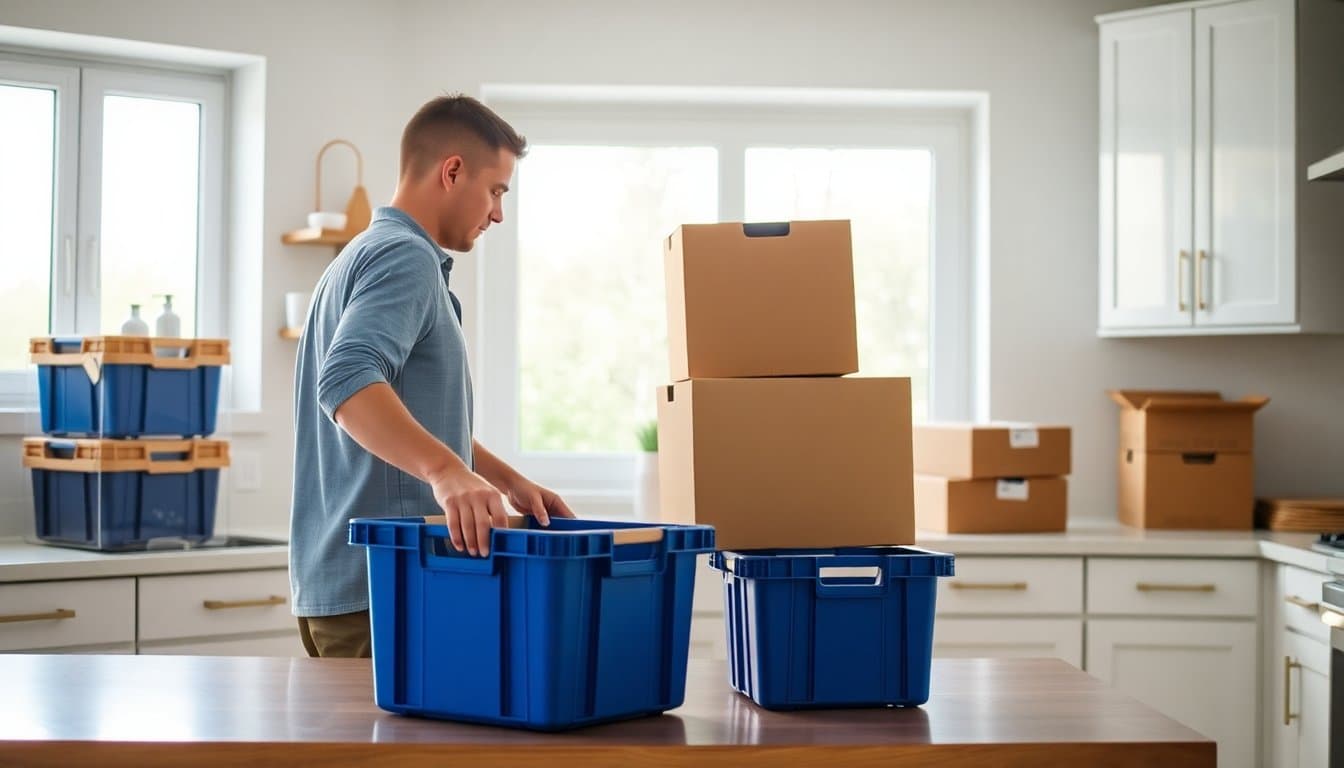
Using reusable plastic totes cuts unpacking time because they stack neatly, don't collapse, and have lids you can pop open and close without wrestling with tape. Cardboard boxes lose their structure after one opening, and suddenly you're working out of a floppy pile. Totes stay organized even when you're moving them between rooms.
Unpacking doesn't have to consume your first month in a new home. Kitchen first, beds made, essentials out, and a steady pace of one to two boxes a day after the initial push. That's it. You'll be fully settled inside two weeks.
FAQs
How long does it take to fully unpack after a move? Most people can have the main living areas functional within 3 days. Full unpacking, including storage areas, decorations, and garage, typically takes 2 to 3 weeks at a steady pace. If boxes are still sealed after a month, you probably don't need what's inside them.
What room should I unpack first? The kitchen. A working kitchen means real meals and coffee, which keeps your energy up for everything else. Make the beds first (that takes 20 minutes), but dedicate your first real unpacking session to getting the kitchen functional.
Should I unpack everything at once? No. Trying to unpack everything in one marathon session leads to exhaustion, bad decisions about placement, and burnout by day two. Set a daily target and stop by 8 PM. You'll make better choices about where things go when you're rested.
How do I deal with items that don't have a place yet? Keep one bin labeled "needs a spot" for anything that doesn't have an obvious home. After living in the space for 2 to 3 weeks, you'll naturally figure out where those items belong. Forcing placement on day one usually means moving things twice.
Keep Reading
Frequently Asked Questions
- How long does it take to fully unpack after a move?
- Most people can have the main living areas functional within 3 days. Full unpacking, including storage areas, decorations, and garage, typically takes 2 to 3 weeks at a steady pace. If boxes are still sealed after a month, you probably don't need what's inside them.
- What room should I unpack first?
- The kitchen. A working kitchen means real meals and coffee, which keeps your energy up for everything else. Make the beds first (that takes 20 minutes), but dedicate your first real unpacking session to getting the kitchen functional.
- Should I unpack everything at once?
- No. Trying to unpack everything in one marathon session leads to exhaustion, bad decisions about placement, and burnout by day two. Set a daily target and stop by 8 PM. You'll make better choices about where things go when you're rested.
- How do I deal with items that don't have a place yet?
- Keep one bin labeled 'needs a spot' for anything that doesn't have an obvious home. After living in the space for 2 to 3 weeks, you'll naturally figure out where those items belong. Forcing placement on day one usually means moving things twice.